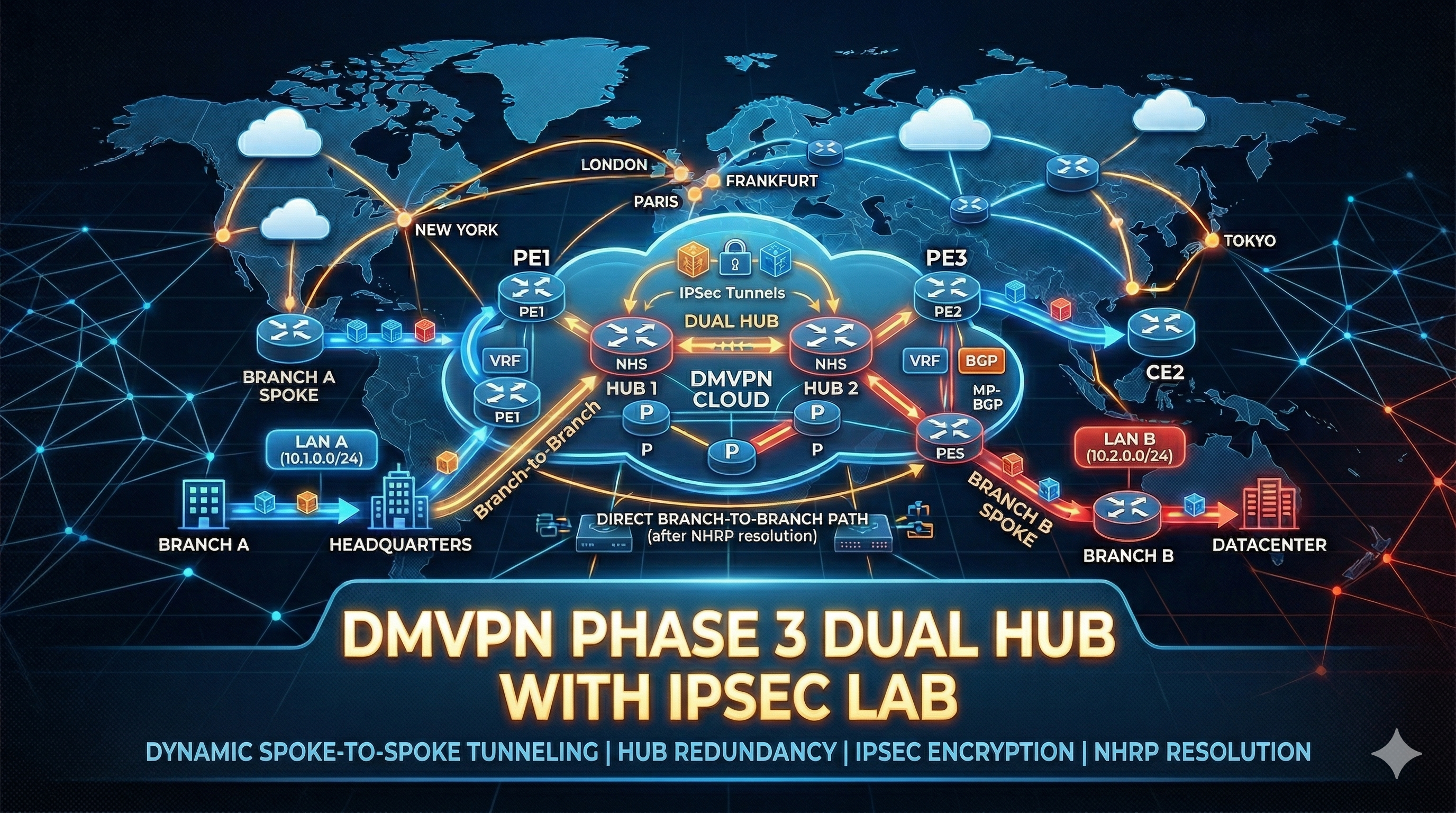
Hi everyone, in this lab I’ll walk you through how to configure a Dual Hub DMVPN Phase3 - IPSec topology.
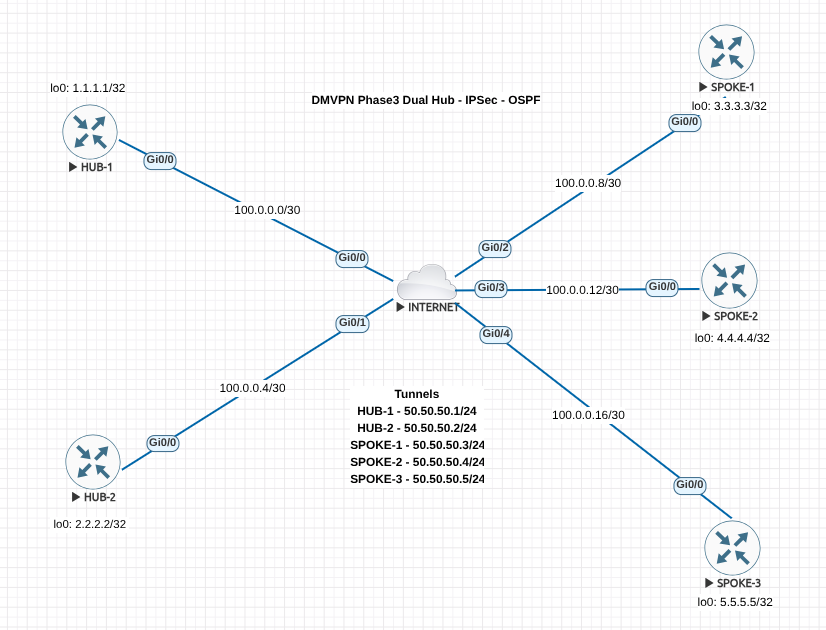
This is a pre-ready topology — I’ve already configured basic interface IP addresses and underlay routing, so I’ll focus on exactly the relevant parts of this lab.
I’ll start by configuring the Hubs.
Here is the topology:
HUB-1:
IPSEC:
HUB-1(config)#crypto isakmp policy 10
HUB-1(config-isakmp)#?
ISAKMP commands:
 authentication  Set authentication method for protection suite
 default         Set a command to its defaults
 encryption      Set encryption algorithm for protection suite
 exit            Exit from ISAKMP protection suite configuration mode
 group           Set the Diffie-Hellman group
 hash            Set hash algorithm for protection suite
 lifetime        Set lifetime for ISAKMP security association
 no              Negate a command or set its defaults

HUB-1(config-isakmp)#authentication pre-share
HUB-1(config-isakmp)#encryption aes 256
HUB-1(config-isakmp)#group 14
HUB-1(config-isakmp)#hash sha256
HUB-1(config-isakmp)#lifetime 86400
HUB-1(config-isakmp)#exit

HUB-1(config)#crypto isakmp key besiktas address 0.0.0.0 0.0.0.0

HUB-1(config)#crypto ipsec transform-set DMVPN-TS esp-aes 256 esp-sha256-hmac
HUB-1(cfg-crypto-trans)#mode transport
HUB-1(cfg-crypto-trans)#exit

HUB-1(config)#crypto ipsec profile DMVPN-PROFILE
HUB-1(ipsec-profile)#set transform-set DMVPN-TS
HUB-1(ipsec-profile)#exit
DMVPN:
HUB-1(config)#int tunnel 0
HUB-1(config-if)#ip addr 50.50.50.1 255.255.255.0
HUB-1(config-if)#tunnel source g0/0
HUB-1(config-if)#tunnel mode gre multipoint
HUB-1(config-if)#tunnel key 1000
HUB-1(config-if)#tunnel protection ipsec profile DMVPN-PROFILE
HUB-1(config-if)#ip mtu 1400
HUB-1(config-if)#ip tcp adjust-mss 1360
HUB-1(config-if)#ip nhrp network-id 10
HUB-1(config-if)#ip nhrp authentication quaresma
HUB-1(config-if)#ip nhrp map multicast dynamic
HUB-1(config-if)#ip nhrp map multicast 100.0.0.6
HUB-1(config-if)#ip nhrp map 50.50.50.2 100.0.0.6
HUB-1(config-if)#ip nhrp redirect
HUB-1(config-if)#ip ospf network point-to-multipoint
HUB-1(config-if)#ip ospf priority 255
HUB-1(config-if)#exit
OSPF:
HUB-1(config)#router ospf 1
HUB-1(config-router)#router-id 1.1.1.1
HUB-1(config-router)#network 50.50.50.0 0.0.0.255 area 0
HUB-1(config-router)#network 1.1.1.1 255.255.255.255 area 0
HUB-1(config-router)#exit
HUB-2:
IPSEC:
HUB-2>en
HUB-2#conf t
Enter configuration commands, one per line.  End with CNTL/Z.
HUB-2(config)#crypto isakmp policy 10
HUB-2(config-isakmp)#encryption aes 256
HUB-2(config-isakmp)#hash sha256
HUB-2(config-isakmp)#authentication pre-share
HUB-2(config-isakmp)#group 14
HUB-2(config-isakmp)#lifetime 86400
HUB-2(config-isakmp)#exit

HUB-2(config)#crypto isakmp key besiktas address 0.0.0.0 0.0.0.0

HUB-2(config)#crypto ipsec transform-set DMVPN-TS esp-aes 256 esp-sha256-hmac
HUB-2(cfg-crypto-trans)#mode transport
HUB-2(cfg-crypto-trans)#exit

HUB-2(config)#crypto ipsec profile DMVPN-PROFILE
HUB-2(ipsec-profile)#set transform-set DMVPN-TS
HUB-2(ipsec-profile)#exit
DMVPN:
HUB-2(config)#interface tunnel 0
HUB-2(config-if)#ip address 50.50.50.2 255.255.255.0
HUB-2(config-if)#tunnel mode gre multipoint
HUB-2(config-if)#tunnel source g0/0
HUB-2(config-if)#tunnel key 1000
HUB-2(config-if)#ip mtu 1400
HUB-2(config-if)#ip tcp adjust-mss 1360
HUB-2(config-if)#tunnel protection ipsec profile DMVPN-PROFILE
HUB-2(config-if)#ip nhrp authentication quaresma
HUB-2(config-if)#ip nhrp network-id 10
HUB-2(config-if)#ip nhrp map multicast dynamic
HUB-2(config-if)#ip nhrp map multicast 100.0.0.2
HUB-2(config-if)#ip nhrp map 50.50.50.1 100.0.0.2
HUB-2(config-if)#ip nhrp redirect
HUB-2(config-if)#ip ospf network point-to-multipoint
HUB-2(config-if)#ip ospf priority 254
HUB-2(config-if)#exit
OSPF:
HUB-2(config)#router ospf 1
HUB-2(config-router)#router-id 2.2.2.2
HUB-2(config-router)#network 2.2.2.2 255.255.255.255 area 0
HUB-2(config-router)#network 50.50.50.0 255.255.255.0 area 0
HUB-2(config-router)#end
Both Hub configurations are done. Now it’s time for the Spokes.
SPOKE-1:
IPSEC:
SPOKE-1>en
SPOKE-1#conf t
Enter configuration commands, one per line.  End with CNTL/Z.
SPOKE-1(config)#crypto isakmp policy 10
SPOKE-1(config-isakmp)#encryption aes 256
SPOKE-1(config-isakmp)#hash sha256
SPOKE-1(config-isakmp)#authentication pre-share
SPOKE-1(config-isakmp)#group 14
SPOKE-1(config-isakmp)#lifetime 86400
SPOKE-1(config-isakmp)#exit

SPOKE-1(config)#crypto isakmp key besiktas address 0.0.0.0 0.0.0.0

SPOKE-1(config)#$crypto ipsec transform-set transform-set DMVPN-TS esp-aes 256 esp-sha256-hmac
SPOKE-1(cfg-crypto-trans)#mode transport
SPOKE-1(cfg-crypto-trans)#exit

SPOKE-1(config)#crypto ipsec profile DMVPN-PROFILE
SPOKE-1(ipsec-profile)#set transform-set DMVPN-TS
SPOKE-1(ipsec-profile)#exit
DMVPN:
SPOKE-1(config)#interface tunnel 0
SPOKE-1(config-if)#ip address 50.50.50.3 255.255.255.0
SPOKE-1(config-if)#tunnel mode gre multipoint
SPOKE-1(config-if)#tunnel source g0/0
SPOKE-1(config-if)#tunnel key 1000
SPOKE-1(config-if)#ip mtu 1400
SPOKE-1(config-if)#ip tcp adjust-mss 1360
SPOKE-1(config-if)#tunnel protection ipsec profile DMVPN-PROFILE
SPOKE-1(config-if)#ip nhrp authentication quaresma
SPOKE-1(config-if)#ip nhrp network-id 10
SPOKE-1(config-if)#ip nhrp map multicast 100.0.0.2
SPOKE-1(config-if)#ip nhrp map multicast 100.0.0.6
SPOKE-1(config-if)#ip nhrp map 50.50.50.1 100.0.0.2
SPOKE-1(config-if)#ip nhrp map 50.50.50.2 100.0.0.6
SPOKE-1(config-if)#ip nhrp nhs 50.50.50.1
SPOKE-1(config-if)#ip nhrp nhs 50.50.50.2
SPOKE-1(config-if)#ip nhrp shortcut
SPOKE-1(config-if)#ip ospf network point-to-multipoint
SPOKE-1(config-if)#ip ospf priority 0
SPOKE-1(config-if)#exit
OSPF:
SPOKE-1(config)#router ospf 1
SPOKE-1(config-router)#router-id 3.3.3.3
SPOKE-1(config-router)#network 3.3.3.3 255.255.255.255 area 0
SPOKE-1(config-router)#network 50.50.50.0 255.255.255.0 area 0
SPOKE-1(config-router)#end
SPOKE-2:
IPSEC:
SPOKE-2>en
SPOKE-2#conf t
SPOKE-2(config)#crypto isakmp policy 10
SPOKE-2(config-isakmp)#encryption aes 256
SPOKE-2(config-isakmp)#hash sha256
SPOKE-2(config-isakmp)#authentication pre-share
SPOKE-2(config-isakmp)#group 14
SPOKE-2(config-isakmp)#lifetime 86400
SPOKE-2(config-isakmp)#exit

SPOKE-2(config)#crypto isakmp key besiktas address 0.0.0.0 0.0.0.0

SPOKE-2(config)#$crypto ipsec transform-set DMVPN-TS esp-aes 256 esp-sha256-hmac
SPOKE-2(cfg-crypto-trans)#mode transport
SPOKE-2(cfg-crypto-trans)#exit

SPOKE-2(config)#crypto ipsec profile DMVPN-PROFILE
SPOKE-2(ipsec-profile)#set transform-set DMVPN-TS
SPOKE-2(ipsec-profile)#exit
DMVPN:
SPOKE-2(config)#interface tunnel 0
SPOKE-2(config-if)#ip address 50.50.50.4 255.255.255.0
SPOKE-2(config-if)#tunnel mode gre multipoint
SPOKE-2(config-if)#tunnel source g0/0
SPOKE-2(config-if)#tunnel key 1000
SPOKE-2(config-if)#ip mtu 1400
SPOKE-2(config-if)#ip tcp adjust-mss 1360
SPOKE-2(config-if)#tunnel protection ipsec profile DMVPN-PROFILE
SPOKE-2(config-if)#ip nhrp authentication quaresma
SPOKE-2(config-if)#ip nhrp network-id 10
SPOKE-2(config-if)#ip nhrp map multicast 100.0.0.2
SPOKE-2(config-if)#ip nhrp map multicast 100.0.0.6
SPOKE-2(config-if)#ip nhrp map 50.50.50.1 100.0.0.2
SPOKE-2(config-if)#ip nhrp map 50.50.50.2 100.0.0.6
SPOKE-2(config-if)#ip nhrp nhs 50.50.50.1
SPOKE-2(config-if)#ip nhrp nhs 50.50.50.2
SPOKE-2(config-if)#ip nhrp shortcut
SPOKE-2(config-if)#ip ospf network point-to-multipoint
SPOKE-2(config-if)#ip ospf priority 0
SPOKE-2(config-if)#exit
OSPF:
SPOKE-2(config)#router ospf 1
SPOKE-2(config-router)#router-id 4.4.4.4
SPOKE-2(config-router)#network 4.4.4.4 255.255.255.255 area 0
SPOKE-2(config-router)#network 50.50.50.0 255.255.255.0 area 0
SPOKE-2(config-router)#end
SPOKE-3:
IPSEC:
SPOKE-3>en
SPOKE-3#conf t
SPOKE-3(config)#crypto isakmp policy 10
SPOKE-3(config-isakmp)#encryption aes 256
SPOKE-3(config-isakmp)#hash sha256
SPOKE-3(config-isakmp)#authentication pre-share
SPOKE-3(config-isakmp)#group 14
SPOKE-3(config-isakmp)#lifetime 86400
SPOKE-3(config-isakmp)#exit

SPOKE-3(config)#crypto isakmp key besiktas address 0.0.0.0 0.0.0.0

SPOKE-3(config)#$c transform-set DMVPN-TS esp-aes 256 esp-sha256-hmac
SPOKE-3(cfg-crypto-trans)#mode transport
SPOKE-3(cfg-crypto-trans)#exit

SPOKE-3(config)#crypto ipsec profile DMVPN-PROFILE
SPOKE-3(ipsec-profile)#set transform-set DMVPN-TS
SPOKE-3(ipsec-profile)#exit
DMVPN:
SPOKE-3(config)#interface tunnel 0
SPOKE-3(config-if)#ip address 50.50.50.5 255.255.255.0
SPOKE-3(config-if)#tunnel mode gre multipoint
SPOKE-3(config-if)#tunnel source g0/0
SPOKE-3(config-if)#tunnel key 1000
SPOKE-3(config-if)#ip mtu 1400
SPOKE-3(config-if)#ip tcp adjust-mss 1360
SPOKE-3(config-if)#tunnel protection ipsec profile DMVPN-PROFILE
SPOKE-3(config-if)#ip nhrp authentication quaresma
SPOKE-3(config-if)#ip nhrp network-id 10
SPOKE-3(config-if)#ip nhrp map multicast 100.0.0.2
SPOKE-3(config-if)#ip nhrp map multicast 100.0.0.6
SPOKE-3(config-if)#ip nhrp map 50.50.50.1 100.0.0.2
SPOKE-3(config-if)#ip nhrp map 50.50.50.2 100.0.0.6
SPOKE-3(config-if)#ip nhrp nhs 50.50.50.1
SPOKE-3(config-if)#ip nhrp nhs 50.50.50.2
SPOKE-3(config-if)#ip nhrp shortcut
SPOKE-3(config-if)#ip ospf network point-to-multipoint
SPOKE-3(config-if)#ip ospf priority 0
SPOKE-3(config-if)#exit
OSPF:
SPOKE-3(config)#router ospf 1
SPOKE-3(config-router)#router-id 5.5.5.5
SPOKE-3(config-router)#network 5.5.5.5 255.255.255.255 area 0
SPOKE-3(config-router)#network 50.50.50.0 255.255.255.0 area 0
SPOKE-3(config-router)#end
TESTS
HUB-1
-
DMVPN Table:
HUB-1#sh dmvpn
Legend: Attrb --> S - Static, D - Dynamic, I - Incomplete
       N - NATed, L - Local, X - No Socket
       T1 - Route Installed, T2 - Nexthop-override
       C - CTS Capable, I2 - Temporary
       # Ent --> Number of NHRP entries with same NBMA peer
       NHS Status: E --> Expecting Replies, R --> Responding, W --> Waiting
       UpDn Time --> Up or Down Time for a Tunnel
==========================================================================

Interface: Tunnel0, IPv4 NHRP Details
Type:Hub/Spoke, NHRP Peers:4,

# Ent  Peer NBMA Addr Peer Tunnel Add State  UpDn Tm Attrb
----- --------------- --------------- ----- -------- -----
    1 100.0.0.6            50.50.50.2  NHRP    never    SC
    1 100.0.0.10           50.50.50.3    UP 00:01:40     D
    1 100.0.0.14           50.50.50.4    UP 00:01:21     D
1 100.0.0.18 50.50.50.5 UP 00:01:07 D-
NHRP Table:
HUB-1#sh ip nhrp
50.50.50.2/32 via 50.50.50.2
  Tunnel0 created 00:14:45, never expire
  Type: static, Flags: used
  NBMA address: 100.0.0.6
50.50.50.3/32 via 50.50.50.3
  Tunnel0 created 00:06:32, expire 00:06:47
  Type: dynamic, Flags: registered nhop
  NBMA address: 100.0.0.10
50.50.50.4/32 via 50.50.50.4
  Tunnel0 created 00:06:31, expire 00:07:07
  Type: dynamic, Flags: registered nhop
  NBMA address: 100.0.0.14
50.50.50.5/32 via 50.50.50.5
  Tunnel0 created 00:05:58, expire 00:07:21
  Type: dynamic, Flags: registered nhop
  NBMA address: 100.0.0.18
HUB-2
-
DMVPN Table:
HUB-2(config)#do sh dmvpn
Legend: Attrb --> S - Static, D - Dynamic, I - Incomplete
       N - NATed, L - Local, X - No Socket
       T1 - Route Installed, T2 - Nexthop-override
       C - CTS Capable, I2 - Temporary
       # Ent --> Number of NHRP entries with same NBMA peer
       NHS Status: E --> Expecting Replies, R --> Responding, W --> Waiting
       UpDn Time --> Up or Down Time for a Tunnel
==========================================================================

Interface: Tunnel0, IPv4 NHRP Details
Type:Hub/Spoke, NHRP Peers:4,

# Ent  Peer NBMA Addr Peer Tunnel Add State  UpDn Tm Attrb
----- --------------- --------------- ----- -------- -----
    1 100.0.0.2            50.50.50.1  NHRP    never    SC
    1 100.0.0.10           50.50.50.3    UP 00:02:05     D
    1 100.0.0.14           50.50.50.4    UP 00:01:46     D
1 100.0.0.18 50.50.50.5 UP 00:01:32 D-
NHRP Table:
HUB-2(config)#do sh ip nhrp
50.50.50.1/32 via 50.50.50.1
  Tunnel0 created 00:12:52, never expire
  Type: static, Flags: used
  NBMA address: 100.0.0.2
50.50.50.3/32 via 50.50.50.3
  Tunnel0 created 00:05:59, expire 00:07:20
  Type: dynamic, Flags: registered nhop
  NBMA address: 100.0.0.10
50.50.50.4/32 via 50.50.50.4
  Tunnel0 created 00:05:58, expire 00:07:39
  Type: dynamic, Flags: registered nhop
  NBMA address: 100.0.0.14
50.50.50.5/32 via 50.50.50.5
  Tunnel0 created 00:05:58, expire 00:07:53
  Type: dynamic, Flags: registered nhop
  NBMA address: 100.0.0.18
SPOKE-1
-
DMVPN Table:
SPOKE-1#sh dmvpn
Legend: Attrb --> S - Static, D - Dynamic, I - Incomplete
       N - NATed, L - Local, X - No Socket
       T1 - Route Installed, T2 - Nexthop-override
       C - CTS Capable, I2 - Temporary
       # Ent --> Number of NHRP entries with same NBMA peer
       NHS Status: E --> Expecting Replies, R --> Responding, W --> Waiting
       UpDn Time --> Up or Down Time for a Tunnel
==========================================================================

Interface: Tunnel0, IPv4 NHRP Details
Type:Spoke, NHRP Peers:2,

# Ent  Peer NBMA Addr Peer Tunnel Add State  UpDn Tm Attrb
----- --------------- --------------- ----- -------- -----
    1 100.0.0.2            50.50.50.1    UP 00:02:25     S
1 100.0.0.6 50.50.50.2 UP 00:02:25 S-
NHRP Table:
SPOKE-1#sh ip nhrp
50.50.50.1/32 via 50.50.50.1
  Tunnel0 created 00:05:40, never expire
  Type: static, Flags: used
  NBMA address: 100.0.0.2
50.50.50.2/32 via 50.50.50.2
  Tunnel0 created 00:05:40, never expire
  Type: static, Flags: used
  NBMA address: 100.0.0.6
SPOKE-2
-
DMVPN Table:
SPOKE-2#sh dmvpn
Legend: Attrb --> S - Static, D - Dynamic, I - Incomplete
       N - NATed, L - Local, X - No Socket
       T1 - Route Installed, T2 - Nexthop-override
       C - CTS Capable, I2 - Temporary
       # Ent --> Number of NHRP entries with same NBMA peer
       NHS Status: E --> Expecting Replies, R --> Responding, W --> Waiting
       UpDn Time --> Up or Down Time for a Tunnel
==========================================================================

Interface: Tunnel0, IPv4 NHRP Details
Type:Spoke, NHRP Peers:2,

# Ent  Peer NBMA Addr Peer Tunnel Add State  UpDn Tm Attrb
----- --------------- --------------- ----- -------- -----
    1 100.0.0.2            50.50.50.1    UP 00:02:28     S
1 100.0.0.6 50.50.50.2 UP 00:02:28 S-
NHRP Table:
SPOKE-2#sh ip nhrp
50.50.50.1/32 via 50.50.50.1
  Tunnel0 created 00:04:57, never expire
  Type: static, Flags: used
  NBMA address: 100.0.0.2
50.50.50.2/32 via 50.50.50.2
  Tunnel0 created 00:04:57, never expire
  Type: static, Flags: used
  NBMA address: 100.0.0.6
SPOKE-3
-
DMVPN Table:
SPOKE-3#sh dmvpn
Legend: Attrb --> S - Static, D - Dynamic, I - Incomplete
       N - NATed, L - Local, X - No Socket
       T1 - Route Installed, T2 - Nexthop-override
       C - CTS Capable, I2 - Temporary
       # Ent --> Number of NHRP entries with same NBMA peer
       NHS Status: E --> Expecting Replies, R --> Responding, W --> Waiting
       UpDn Time --> Up or Down Time for a Tunnel
==========================================================================

Interface: Tunnel0, IPv4 NHRP Details
Type:Spoke, NHRP Peers:2,

# Ent  Peer NBMA Addr Peer Tunnel Add State  UpDn Tm Attrb
----- --------------- --------------- ----- -------- -----
    1 100.0.0.2            50.50.50.1    UP 00:02:27     S
1 100.0.0.6 50.50.50.2 UP 00:02:26 S-
NHRP Table:
SPOKE-3#show ip nhrp
50.50.50.1/32 via 50.50.50.1
  Tunnel0 created 00:02:54, never expire
  Type: static, Flags: used
  NBMA address: 100.0.0.2
50.50.50.2/32 via 50.50.50.2
  Tunnel0 created 00:02:54, never expire
  Type: static, Flags: used
  NBMA address: 100.0.0.6
As you see in the table above, even though we configured all the necessary things, Spokes do not know how to reach each other. This is the nature of DMVPN Phase3.
In Phase 3, once a spoke pings another spoke, it learns the route and writes it to the DMVPN table.
That means, I’ll be able to see a new DMVPN tunnel entry once I ping from SPOKE-1 to SPOKE-2 and SPOKE-3.
Let’s see.
SPOKE-1:
SPOKE-1#sh dmvpn
Legend: Attrb --> S - Static, D - Dynamic, I - Incomplete
       N - NATed, L - Local, X - No Socket
       T1 - Route Installed, T2 - Nexthop-override
       C - CTS Capable, I2 - Temporary
       # Ent --> Number of NHRP entries with same NBMA peer
       NHS Status: E --> Expecting Replies, R --> Responding, W --> Waiting
       UpDn Time --> Up or Down Time for a Tunnel
==========================================================================

Interface: Tunnel0, IPv4 NHRP Details
Type:Spoke, NHRP Peers:2,

# Ent  Peer NBMA Addr Peer Tunnel Add State  UpDn Tm Attrb
----- --------------- --------------- ----- -------- -----
    1 100.0.0.2            50.50.50.1    UP 00:07:41     S
    1 100.0.0.6            50.50.50.2    UP 00:07:41     S


SPOKE-1#ping 4.4.4.4
Type escape sequence to abort.
Sending 5, 100-byte ICMP Echos to 4.4.4.4, timeout is 2 seconds:
!!!!!
Success rate is 100 percent (5/5), round-trip min/avg/max = 24/35/44 ms


SPOKE-1#sh dmvpn
Legend: Attrb --> S - Static, D - Dynamic, I - Incomplete
       N - NATed, L - Local, X - No Socket
       T1 - Route Installed, T2 - Nexthop-override
       C - CTS Capable, I2 - Temporary
       # Ent --> Number of NHRP entries with same NBMA peer
       NHS Status: E --> Expecting Replies, R --> Responding, W --> Waiting
       UpDn Time --> Up or Down Time for a Tunnel
==========================================================================

Interface: Tunnel0, IPv4 NHRP Details
Type:Spoke, NHRP Peers:3,

# Ent  Peer NBMA Addr Peer Tunnel Add State  UpDn Tm Attrb
----- --------------- --------------- ----- -------- -----
    2 100.0.0.14           50.50.50.4    UP 00:00:02   DT2
                           50.50.50.4    UP 00:00:02   DT2
    1 100.0.0.2            50.50.50.1    UP 00:07:50     S
    1 100.0.0.6            50.50.50.2    UP 00:07:50     S


SPOKE-1#sh ip nhrp
4.4.4.4/32 via 50.50.50.4
  Tunnel0 created 00:02:35, expire 00:07:24
  Type: dynamic, Flags: router rib nho
  NBMA address: 100.0.0.14
50.50.50.1/32 via 50.50.50.1
  Tunnel0 created 00:10:23, never expire
  Type: static, Flags: used
  NBMA address: 100.0.0.2
50.50.50.2/32 via 50.50.50.2
  Tunnel0 created 00:10:23, never expire
  Type: static, Flags: used
  NBMA address: 100.0.0.6
50.50.50.3/32 via 50.50.50.3
  Tunnel0 created 00:02:35, expire 00:07:24
  Type: dynamic, Flags: router unique local
  NBMA address: 100.0.0.10
   (no-socket)
50.50.50.4/32 via 50.50.50.4
  Tunnel0 created 00:02:35, expire 00:07:24
  Type: dynamic, Flags: router nhop rib nho
  NBMA address: 100.0.0.14
Now, SPOKE-1 just learned how to reach SPOKE-2.
Traceroute Test:
In this test I’ll show you how Spokes learn the direct path to reach each other through the Hub.
SPOKE-3:
SPOKE-3#sh dmvpn
Legend: Attrb --> S - Static, D - Dynamic, I - Incomplete
       N - NATed, L - Local, X - No Socket
       T1 - Route Installed, T2 - Nexthop-override
       C - CTS Capable, I2 - Temporary
       # Ent --> Number of NHRP entries with same NBMA peer
       NHS Status: E --> Expecting Replies, R --> Responding, W --> Waiting
       UpDn Time --> Up or Down Time for a Tunnel
==========================================================================

Interface: Tunnel0, IPv4 NHRP Details
Type:Spoke, NHRP Peers:2,

# Ent  Peer NBMA Addr Peer Tunnel Add State  UpDn Tm Attrb
----- --------------- --------------- ----- -------- -----
    1 100.0.0.2            50.50.50.1    UP 00:10:32     S
    1 100.0.0.6            50.50.50.2    UP 00:10:32     S


SPOKE-3#sh ip nhrp
50.50.50.1/32 via 50.50.50.1
  Tunnel0 created 00:10:38, never expire
  Type: static, Flags: used
  NBMA address: 100.0.0.2
50.50.50.2/32 via 50.50.50.2
  Tunnel0 created 00:10:38, never expire
  Type: static, Flags: used
  NBMA address: 100.0.0.6


SPOKE-3#traceroute 3.3.3.3
Type escape sequence to abort.
Tracing the route to 3.3.3.3
VRF info: (vrf in name/id, vrf out name/id)
 1 50.50.50.1 14 msec
   50.50.50.2 12 msec
   50.50.50.1 14 msec
 2 50.50.50.3 26 msec 25 msec *
SPOKE-3#
As you see above, SPOKE-3 went to the Hubs for the very first time to learn how to reach SPOKE-1. Once it learned, it writes the direct path into its NHRP table.
Now, I’ll run the traceroute again to show you how it reaches SPOKE-1 directly.
SPOKE-3#traceroute 3.3.3.3
Type escape sequence to abort.
Tracing the route to 3.3.3.3
VRF info: (vrf in name/id, vrf out name/id)
 1 50.50.50.3 19 msec 19 msec *


SPOKE-3#sh ip nhrp
3.3.3.3/32 via 50.50.50.3
  Tunnel0 created 00:08:23, expire 00:01:36
  Type: dynamic, Flags: router used rib nho
  NBMA address: 100.0.0.10
50.50.50.1/32 via 50.50.50.1
  Tunnel0 created 00:19:56, never expire
  Type: static, Flags: used
  NBMA address: 100.0.0.2
50.50.50.2/32 via 50.50.50.2
  Tunnel0 created 00:19:56, never expire
  Type: static, Flags: used
  NBMA address: 100.0.0.6
50.50.50.3/32 via 50.50.50.3
  Tunnel0 created 00:08:23, expire 00:01:36
  Type: dynamic, Flags: router nhop rib nho
  NBMA address: 100.0.0.10
50.50.50.5/32 via 50.50.50.5
  Tunnel0 created 00:08:23, expire 00:01:36
  Type: dynamic, Flags: router unique local
  NBMA address: 100.0.0.18
   (no-socket)
As you see, SPOKE-3 now reaches SPOKE-1 directly. From now on, they will reach each other directly.
Thank you for taking time to read this article, I hope you’ll find it useful.
Keep up the great work!